

Why Interoperability Is the Make-or-Break Factor for Your MCX Deployment
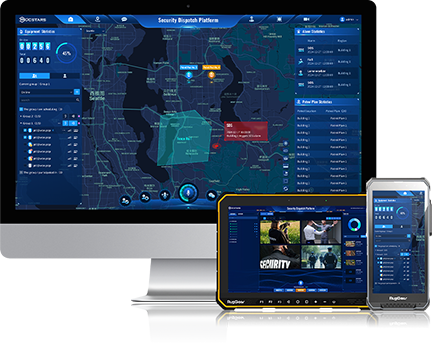
 Why Some MCX Deployments Succeed While Others Struggle
As organizations transition from traditional Land Mobile Radio (LMR) systems to LTE and 5G networks, Mission Critical Services (MCX) have become the preferred communication framework for industries where reliable, real-time communication is essential. Public safety agencies, transportation operators, utilities, airports, ports, and industrial enterprises are increasingly adopting broadband communications to improve operational efficiency, workforce collaboration, and situational awareness.
However, deploying an MCX platform is only the beginning of the journey.
Many organizations discover that different communication networks, devices, dispatch systems, and business applications still operate independently after deployment. Legacy radio systems may not communicate seamlessly with broadband users. Video platforms may be isolated from dispatch centers. Different brands of communication terminals may struggle to work together efficiently.
These communication silos limit operational efficiency and reduce the value of digital transformation investments.
This is why MCX interoperability has become one of the most important success factors in modern mission-critical communications. Rather than being an optional technical capability, interoperability enables organizations to connect existing infrastructure with new technologies while maintaining reliable communications across their entire operation.
What Is MCX Communication?
One of the most frequently asked questions is:
What is MCX communication?
MCX stands for Mission Critical Services, a suite of standardized communication services defined for broadband LTE and 5G networks. Unlike consumer communication applications, MCX is designed for environments where communication reliability, security, and low latency are essential.
A complete MCX platform includes three core services:
● Mission Critical Push-to-Talk (MCPTT) enables instant group voice communication with priority handling and low latency.
● Mission Critical Video (MCVideo) provides real-time video sharing to improve situational awareness during daily operations and emergency response.
● Mission Critical Data (MCData) supports secure messaging, file sharing, status reporting, telemetry, and operational data exchange.
Together, these services allow organizations to communicate through voice, video, and data on a unified broadband platform while maintaining the reliability expected in mission-critical environments.
Today, MCX solutions are widely used across public safety, transportation, utilities, energy, manufacturing, logistics, mining, airports, and smart city projects where communication directly impacts operational safety and business continuity.
Compatibility vs. Interoperability: What's the Difference?
The terms compatibility and interoperability are often used interchangeably, but they describe very different capabilities.
Compatibility means two products can connect or function together under certain conditions.
Interoperability means different communication systems, devices, applications, and networks can exchange information and operate together as one integrated communication ecosystem.
For example, an interoperable MCX platform allows:
● Broadband LTE and 5G users to communicate with legacy LMR systems.
● Different brands of smart radios, smartphones, tablets, and dispatch consoles to work together.
● CCTV systems, body-worn cameras, drones, and video platforms to share live information with dispatch centers.
● Geographic information systems, workforce management platforms, and other enterprise applications to exchange operational data in real time.Compatibility creates a connection.
Interoperability creates collaboration.
For organizations managing mission-critical operations, that difference can determine whether communication remains effective during routine operations as well as emergency situations.
Why Interoperability Is Essential for MCX Projects
1. Supporting a Gradual Migration from Legacy Radio to Broadband Communications
Replacing an entire communication system at once is rarely practical.
Most organizations operate mixed communication environments that include traditional LMR infrastructure alongside LTE and emerging 5G networks.
An interoperable MCX platform allows these technologies to coexist, enabling organizations to modernize gradually without disrupting daily operations or replacing all existing equipment at the same time.
This phased migration reduces investment risk while protecting valuable infrastructure that continues to provide operational value.
2. Improving Collaboration Across Organizations
Large-scale incidents often involve multiple organizations working together.
Police departments, emergency medical services, transportation authorities, utilities, and industrial response teams all require fast and reliable communication to coordinate resources and respond effectively.
Without interoperability, each organization may rely on separate communication systems, making information sharing slower and less efficient.
An interoperable MCX platform enables voice, video, messaging, and location information to be shared across different organizations without requiring everyone to use identical communication devices or infrastructure.
The result is faster decision-making, greater situational awareness, and improved operational coordination.
3. Preparing Communication Networks for Future Technologies
Mission-critical communications continue to evolve.
Organizations investing in broadband communications today are also planning to integrate private 5G, artificial intelligence, drones, wearable devices, Internet of Things (IoT) sensors, and intelligent video analytics in the future.
Choosing an open, standards-based MCX platform provides the flexibility needed to integrate new technologies without redesigning the entire communication infrastructure.
Interoperability not only supports today's operational requirements but also creates a foundation for long-term digital transformation.
Common Challenges in MCX Deployment
Although the benefits of MCX are significant, achieving interoperability remains one of the most complex aspects of deployment.
Organizations commonly encounter challenges such as:
● Integrating legacy LMR infrastructure with LTE and 5G broadband networks.
● Supporting communication across devices from multiple manufacturers.
● Connecting dispatch systems with video platforms and geographic information systems.
● Managing users, permissions, and security policies across different communication environments.
● Maintaining reliable communications across public, private, and hybrid network deployments.
● Expanding communication systems as operational requirements continue to grow.These challenges demonstrate why interoperability should be considered during the planning stage rather than after deployment.
Building an Interoperable MCX Ecosystem
A modern MCX deployment should be viewed as more than a Push-to-Talk platform.
Instead, it should function as the communication hub that connects people, devices, applications, and operational systems into one integrated ecosystem.
A comprehensive interoperable communication environment typically includes:
● Broadband LTE and private 5G communication networks.
● Legacy LMR integration.
● Mission Critical Push-to-Talk, Mission Critical Video, and Mission Critical Data services.
● Dispatch and command center software.
● Smart radios, smartphones, tablets, vehicle terminals, and rugged communication devices.
● CCTV systems, body-worn cameras, drones, and video platforms.
● Indoor and outdoor positioning solutions.
● Enterprise applications including geographic information systems, workforce management platforms, and emergency management systems.The broader the ecosystem, the greater the operational value organizations can obtain from their communication investment.
How POCSTARS Supports MCX Interoperability
Designed around 3GPP Mission Critical Services, the POCSTARS MCX solution, MCSTARS, addresses one of the most persistent challenges in mission-critical communications: system fragmentation.
Rather than focusing only on voice communication, MCSTARS acts as an integrated interoperability layer that connects multiple networks, devices, and applications into a unified operational environment.
● LMR-to-broadband interworking: Enables communication between legacy radio systems and LTE/5G networks for smooth migration without full replacement.
● Multi-device communication across vendors: Removes device and manufacturer barriers so different terminals can operate within unified MCX groups.
● Unified video integration: Brings together surveillance systems, body cameras, and drone feeds into a single dispatch view for real-time situational awareness.
● Indoor and outdoor positioning: Combines multiple positioning technologies to ensure continuous tracking of personnel and assets across environments.
● Flexible deployment architecture: Supports public, private, hybrid, and OTT deployments to match different operational and security requirements.
Conclusion
As mission-critical communications evolve toward LTE and 5G, interoperability has become a defining factor in MCX deployment success.
It enables organizations to connect legacy systems with modern networks, unify fragmented communication environments, and support collaboration across agencies, devices, and applications.
Without interoperability, even advanced MCX platforms risk becoming isolated systems.
With interoperability at the core, MCX becomes a true operational enabler—improving coordination, enabling real-time decision-making, and supporting future technologies such as private 5G, intelligent video analytics, and connected field operations.