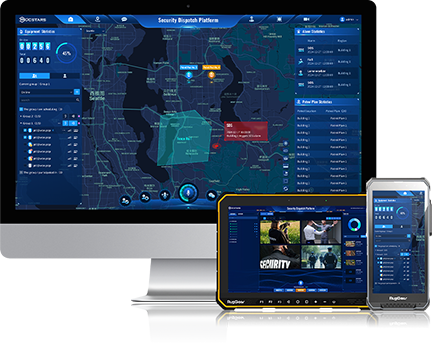


“MCX is just an app, any smartphone will do.” This is a common assumption when MCX discussions start, especially for teams that are used to consumer app rollouts.
In mission and business-critical environments, readiness is not defined by whether an app can be installed. It is defined by whether a chosen device set behaves predictably under operational conditions, across the required workflows, integrations, and policies.
This article explains why MCX readiness goes beyond an app experience, what “device readiness” typically means in real programmes, and how to structure a device evaluation that reduces risk before scale.
Exploring MCX capabilities and project readiness?
View the MCX Solution PageTL;DR
MCX readiness goes beyond an app, it is about predictable behaviour in real operations.
In mission contexts, organisations typically define a device scope and evaluate readiness, rather than assuming “any phone” is suitable.
A practical evaluation makes operating conditions and acceptance criteria explicit before scaling.
Myth vs Fact
Myth: “MCX is just an app, any smartphone will do.”
This myth usually comes from a familiar consumer pattern: if an app installs and runs, it is considered “ready”. It also comes from the fact that many solutions share a similar push-to-talk interaction model on the surface.
In mission environments, however, the cost of unpredictable behaviour is higher. “Works on my phone” is rarely enough to support controlled rollout.
Fact: MCX readiness goes beyond an app, device readiness is evaluated, not assumed
MCX readiness goes beyond an app. In real programmes, device readiness is evaluated against project requirements and standards-aligned expectations, rather than assumed ready by default. The goal is practical: reduce operational surprises before scale.
Why device readiness becomes a real project topic
In MCX evaluations, device discussions become unavoidable because readiness is shaped by more than a feature list.
Operational behaviour: group workflows, call handling, audio behaviour, and user procedures need predictable outcomes.
Environment fit: coverage realities, indoor and outdoor transitions, accessories, and ruggedness expectations can change what “works” means.
Policy and device management: security rules and MDM policies often decide whether deployments remain stable at scale.
Ecosystem dependencies: devices sit inside wider operational environments, including dispatch, gateways, identity, and interworking boundaries.
What “readiness” means, in plain terms
This does not mean every project follows the same certification path. It means device scope and operating conditions are treated as controlled variables, not left to chance.
Defined device scope: specific device models and OS versions are selected for evaluation, not “any smartphone”.
Defined operating conditions: network context, coverage constraints, and policy limits are made explicit.
Defined acceptance criteria: what “ready” looks like is agreed in operational terms before rollout beyond a controlled scope.
The result is not perfection. It is predictable rollout, with clearer risk boundaries.
A practical checklist for planning device evaluation
These questions keep device discussions grounded, without turning the process into a procurement catalogue exercise.
1) Define the device scope for this phase
Which device types are in scope, smartphone, rugged handheld, vehicle device, tablet, or dispatcher workstation?
Which specific models and OS versions will be used for evaluation?
2) Define the operating conditions
Which environments must be supported, indoor, outdoor, mixed sites, remote coverage constraints?
Any security, MDM, or policy constraints that affect configuration and user behaviour?
3) Define what “proof” looks like before scale
What evidence is acceptable for the programme, lab validation, multi-vendor outcomes, or field trials?
What are the acceptance criteria, stability, user adoption, integration behaviour, operational fit?
Planning an MCX evaluation?
Share your device types, OS policy constraints, and operating environment. We can align on a practical evaluation scope and success criteria.
Contact POCSTARSFAQ
Are consumer smartphones always suitable for MCX evaluation?
Not by default. Many programmes define a device scope and evaluate readiness under their operational conditions before scaling.
Does “device readiness” mean a vendor defines the rules?
Not necessarily. Readiness is typically defined by the programme context, including workflows, operating conditions, policy constraints, and standards-aligned expectations.
What is a practical first step for device planning?
Start with a controlled scope: define device models and OS versions, define operating conditions, then agree what evidence is required before scale.
Conclusion
MCX readiness goes beyond an app experience. In mission environments, organisations typically evaluate device readiness against programme requirements, rather than assuming any smartphone is suitable. The goal is practical: reduce surprises and protect operational continuity as adoption scales.
If your organisation is planning an MCX evaluation and wants a grounded discussion around device scope, operating conditions, and readiness criteria, share your context and requirements, and we can align on a practical evaluation approach.
Related reading
MCPTT ≠ PMR/LMR: Understanding the Evolution of Mission-Critical Communications
MCX Migration Reality: Why Roadmaps Are Phased, Not Overnight
MCX Interoperability: Why Standards Still Need Validation
Last updated: 2026-02-25